
Lip Blushing Healing Day by Day: What to Expect After Lip PMU in Seoul
✓ Reviewed by Lee An Na — Director, INMOREBEAUTY SEOUL (Gangnam) · Last updated: September 9, 2026 · Reading time: 11 min

The first two weeks after a lip session look nothing like the result you booked. Lips are one of the most reactive areas in semi-permanent makeup, and the color you see on day two is not the color you keep.
At INMOREBEAUTY SEOUL — a lip-focused semi-permanent makeup studio on Gangnam-daero in Seocho-gu, Seoul, South Korea, a three-minute walk from Gangnam Station Exit 10 — Director Lee An Na sends every client home with a healing balm and written aftercare in English, Japanese, and Traditional Chinese. This guide walks through what that healing actually looks like, day by day.
Each phase below separates what is normal from what is not, so you can tell ordinary healing from a real warning sign. Individual results may vary.
Quick Answer: Lip PMU healing follows a predictable pattern:
Hours 0–24 — lips look swollen, bright, and more saturated than the final shade.
Days 1–3 — the dark phase; color reads far bolder than the shade you chose.
Days 3–6 — flaking begins as surface pigment sheds.
Days 7–14 — the ghost phase; color looks faded, patchy, or almost gone.
Week 4–6 — settled final color, and the point at which a touch-up is assessed. Individual results may vary.
What Happens Immediately After Your Lip Session (Hours 0–24)?
The first 24 hours are the most swollen and the most saturated stage of lip PMU healing. Your lips will look fuller than usual, feel tight and warm, and carry a color far more vivid than the shade you approved during your consultation. That vividness is a combination of fresh surface pigment, inflammation, and lymph fluid — not the pigment that has settled into the skin. Swelling is usually most noticeable on the morning after a session and eases through the first full day.
For the rest of the day, keep the lips clean, dry, and lightly balmed. Blot gently with clean tissue rather than wiping, drink through a straw, and avoid salty, spicy, or very hot food until the tightness eases. Sleep on your back if you can, and do not apply lipstick, gloss, or any product other than the balm you were given.
What's normal during Hours 0–24:
Lips look noticeably swollen and feel tight or slightly numb as topical numbing wears off.
Color appears bright, uniform, and far bolder than the shade agreed at consultation.
Small amounts of clear or lightly tinted fluid appear on the surface and are blotted away.
What's NOT normal (message us straight away):
Swelling that spreads beyond the lip border into the cheeks or under the eyes.
Throbbing pain that increases rather than decreases after the first several hours.
Bleeding that continues instead of stopping shortly after your session.
Days 1–3: The Dark Phase, and Why Your Lips Look Like Lipstick
Days 1 to 3 are the darkest point of the entire healing cycle, and the phase that alarms first-time clients most. The color can read two shades deeper than the one you selected, with a matte, drawn-on quality closer to a bold lipstick than a tint. This happens because pigment still sitting in the upper layers of skin has begun to oxidize while the skin underneath is still inflamed and holding that pigment near the surface. Nothing has gone wrong, and no shade has been mixed incorrectly.
This darkening pattern is consistent across cosmetic tattooing rather than unique to lips, and it is reflected in the phase model used in international permanent cosmetics professional healing standards. Lips simply show it more dramatically than brows, because the tissue is thinner, more vascular, and already pigmented.
Keep the lips balmed in a thin layer through this window. A heavy, occlusive layer traps moisture and softens the forming surface, which makes early flaking messier than it needs to be.
What's normal during Days 1–3:
Color looks significantly deeper and more opaque than your chosen shade.
The lip surface feels dry, tight, and slightly rough.
Swelling reduces noticeably compared with the first morning.
What's NOT normal (message us straight away):
Yellow or green discharge, or a genuinely unpleasant odor.
Fever, chills, or spreading redness moving away from the lip border.
A cold sore breakout, which needs your physician's advice rather than ours.
Days 3–6: Peeling and Flaking Begin
Peeling on the lips starts earlier and finishes faster than on brows, because lip tissue renews more quickly. Around day three the surface begins to flake in small patches, often starting at the center of the lower lip and spreading outward. The flakes carry away surface pigment, which is exactly what they are supposed to do. What sits underneath is the pigment that becomes your result.
The strongest rule of the entire healing cycle applies here: do not pick, peel, bite, or exfoliate. Pulling a flake that is not ready lifts pigment out of skin that has not finished closing, and that is the single most common cause of patchy healed color needing correction at the touch-up. Let every flake release on its own, keep the balm thin, and resist licking your lips, which dries them further.
Eating is manageable with small adjustments. Cut food into smaller pieces, avoid citrus and vinegar, skip anything that requires a wide bite, and rinse with water afterward.
What's normal during Days 3–6:
Small dry flakes lift from the lip surface, sometimes taking visible pigment with them.
Color looks uneven and patchy as some areas shed before others.
Mild itching or tightness accompanies the flaking.
What's NOT normal (message us straight away):
Open, weeping cracks in the lip body rather than surface flaking.
Pain that returns after it had already settled.
Blistering along the lip line or the skin immediately around it.
Not sure whether your lips are peeling on schedule? Speak with Director Lee An Na about your healing →
Is It Normal for Lip Color to Vanish During the Ghost Phase (Days 7–14)?
Yes — and this is the phase clients message us about more than any other. Once peeling finishes, the lips often look almost bare, with the color soft, cloudy, or seemingly absent altogether. Many clients are convinced at this point that the session did not take. In the great majority of cases the pigment is still there and simply cannot be seen yet.
Why this happens: the new layer of epidermis that formed over the pigment is still immature and slightly opaque, so it sits over the color like a milky film. As those new skin cells mature and become more translucent over the following weeks, the pigment beneath gradually becomes visible again. This is why assessing your result during the ghost phase tells you about your skin's healing stage, not about your color.
The practical instruction for this window is to wait, keep the lips hydrated, and stay out of strong direct sun. Judging the shade now — or booking a correction elsewhere in a panic — is the most common regret we hear about.
What's normal during Days 7–14:
Color appears washed out, cloudy, or noticeably lighter than it did on day one.
Tone looks uneven, with the outer edges reading fainter than the center.
The lip surface feels smooth again and no longer flakes.
What's NOT normal (message us straight away):
Persistent redness, heat, or tenderness two weeks after your session.
A raised or hardened ridge along the lip line.
Any sign of infection described in American Academy of Dermatology guidance on tattoo skin care.
Week 4–6: The Settled Color and Your Touch-Up
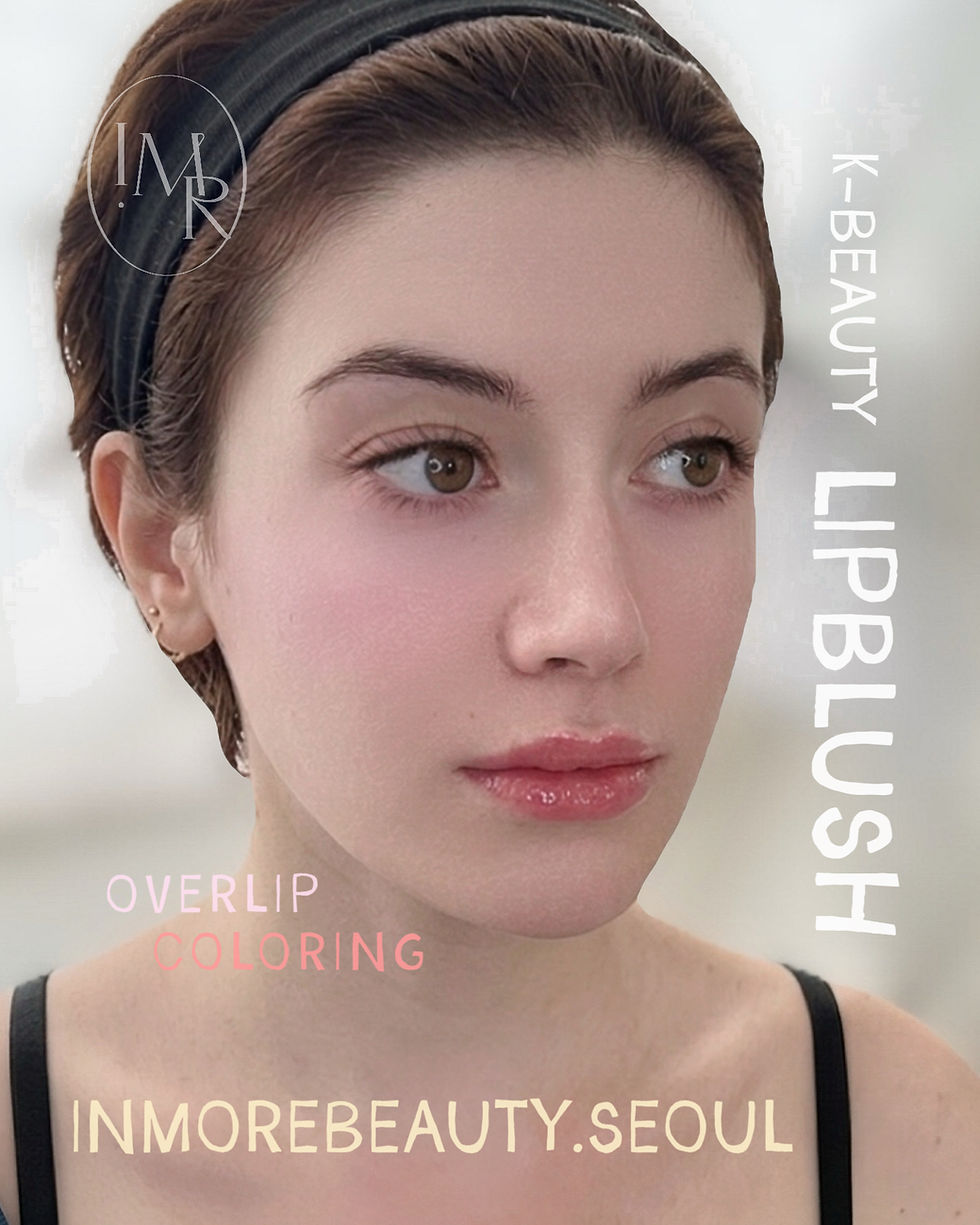
By week four to six the healed color has returned and stabilized, and this is the first honest look at your result. Expect a softer, more diffused version of the shade you approved — closer to a tint that belongs on your face than to applied lipstick. That soft finish is the intended outcome of the Bare Glow Lips approach rather than a shortfall of pigment. Depth, evenness, and border definition can all be built further once the skin has fully settled.
INMOREBEAUTY SEOUL schedules the touch-up at six to eight weeks after the first session. That appointment is where color retention is assessed, any area that shed unevenly is rebalanced, and the shade is deepened or warmed if you want more presence. Clients coming from a darker natural lip tone through dark lip neutralization in Seoul follow the same timeline. At INMOREBEAUTY SEOUL, neutralization, color, and lip line correction are completed in a single session, so the color you see at week six is your corrected shade — not a base waiting for a second round.
What's normal during Week 4–6:
Color reads softer and more natural than it did immediately after the session.
Small patches hold less pigment than the rest of the lip.
The tone looks slightly cooler or warmer than expected before the touch-up refines it.
What's NOT normal (message us straight away):
An area that has taken no pigment at all and has stayed bare since peeling.
A sharply visible line where healed and unhealed color meet.
Any lasting texture change in the lip surface.
Does Healing Differ Between Lip Blushing, Dark Lip Neutralization, and Permanent Lip Makeup?
The five healing phases are the same across all three lip services, but the destination differs. Lip blushing places a sheer wash of pigment, so the ghost phase feels most dramatic and the settled result is the softest of the three. Permanent Lip Makeup builds fuller saturation, so more color stays visible through peeling and the settled result carries more presence. Dark lip neutralization starts from a darker base, so the ghost phase can look more uneven as the neutralizing tone and the color tone reappear at slightly different speeds. Individual results may vary.
Lips are a different tissue from brows or eyeliner. The lip itself is mucosal skin, while the lip line sits on ordinary facial skin, and the two hold pigment differently. Laying a neutralizing base into the mucosa (tone-up), building color over it, and correcting the lip line on the skin just outside it — all in one sitting — is one of the most technically demanding procedures in semi-permanent makeup. Because of that difficulty, many studios split the work into separate, separately priced sessions, or add extra rounds. At INMOREBEAUTY SEOUL, Director Lee An Na performs all three steps in a single session at a reasonable price, so one properly executed session is enough for most clients to see their lip tone corrected and visibly brighter. Individual results may vary.
If you have not yet chosen between the three, the differences in technique, longevity, and finish are set out in our lip blushing in Seoul complete guide and in our guide to permanent lip makeup in Seoul.
How Do You Protect Your Lip PMU Results Long-Term?
Sun exposure is the single largest factor in how quickly lip pigment fades. Ultraviolet light breaks down pigment particles over time, so a lip balm with SPF used daily is the most effective retention habit available to you. General peer-reviewed dermatology guidance on tattoo aftercare supports the same principle across cosmetic tattooing.
Keep strong exfoliating actives away from the lip border once you are healed. Retinoids, glycolic and salicylic acids, and physical lip scrubs all accelerate cell turnover, which lifts pigment faster. Smoking, frequent sauna or hot yoga use, and very dry indoor air shorten retention as well.
Lip blushing at INMOREBEAUTY SEOUL is designed to last two to three years, and Permanent Lip Makeup around three years, with a color refresh available whenever the tone softens more than you would like. Booking a refresh before the color has faded completely makes the session shorter and the match easier.
Frequently Asked Questions
Why do my lips look so dark after lip blushing?
Surface pigment oxidizes during the first three days while the skin underneath is still inflamed, which makes the color read far bolder than the shade you approved. It is the most common healing question we receive, and it resolves on its own once peeling begins.
How long does lip blushing take to heal?
Surface healing takes roughly seven to ten days, and the color settles fully between week four and week six. The touch-up is scheduled at six to eight weeks, once that settled color is visible.
Can I eat normally after a lip tattoo?
You can eat from the same day with small adjustments for about a week. Cut food smaller, avoid citrus, vinegar, spice, and very hot dishes, drink through a straw where practical, and rinse with water afterward.
Can I wear lipstick during lip PMU healing?
Avoid lipstick, gloss, and lip tint until all flaking has finished, usually around day ten. Until then, use only the healing balm provided at your session.
Do I need a touch-up after lip blushing?
A touch-up at six to eight weeks is part of the standard protocol rather than a sign that something went wrong. Lips shed pigment unevenly by nature, and the second session is where evenness and depth are refined.
Is the healing process the same for eyebrow PMU?
The five phases are the same, but the timing and the look differ. Our eyebrow PMU healing day by day guide covers what to expect after microblading or powder brows.
Does dark lip neutralization need more than one session?
At INMOREBEAUTY SEOUL, neutralization, color, and lip line correction are done together in one session, so most clients see a corrected, brighter lip tone from a single visit. The optional touch-up at six to eight weeks refines evenness and depth; it is not where the color is added.
Ready to Book?
Lee An Na has practiced semi-permanent makeup since 2020 and is a nationally certified makeup artist and colorist — a credential that shapes her color-first approach to every lip session. She performs every Bare Glow Lips treatment personally, start to finish, at INMOREBEAUTY SEOUL, a lip-focused semi-permanent makeup studio in Gangnam, Seoul.
📍 INMOREBEAUTY SEOUL — Semi-Permanent Makeup Studio (Gangnam, Seoul)906, Center Plaza Bldg 1, 10 Gangnam-daero 61-gil, Seocho-gu, Seoul
🚇 3-min walk from Gangnam Station Exit 10
🕒 Mon–Sat 11:00–21:00 (Closed Sun)
Semi-permanent makeup is a cosmetic procedure. Individual results may vary based on skin type, lifestyle, and aftercare. A pre-treatment consultation is required to determine the most suitable technique for your lip tone, skin condition, and goals. All information provided is educational and does not replace professional consultation.


댓글